

House Democrats Promote New Centrist Immigration Framework Ahead of Midterms
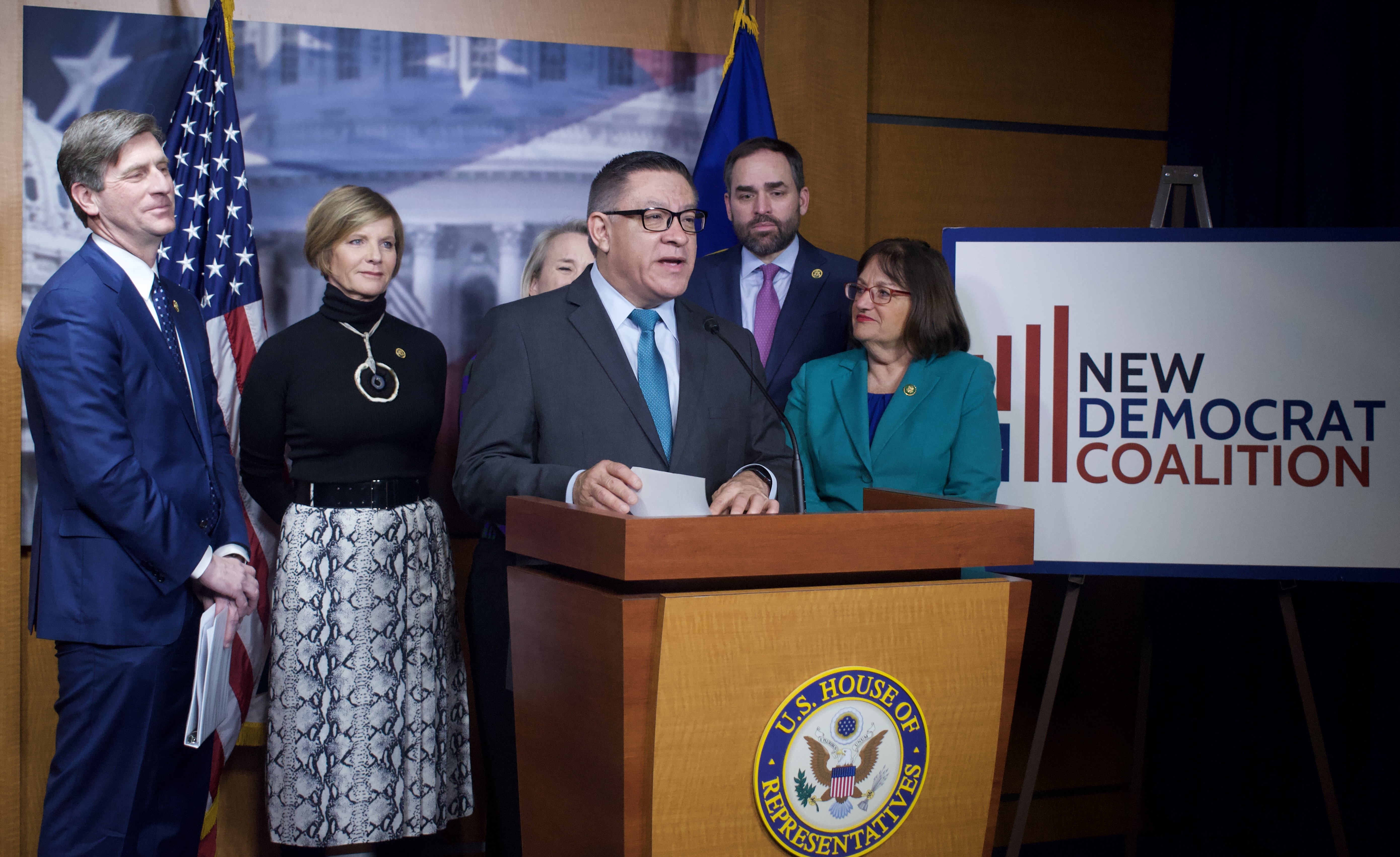
As the 2026 midterm elections loom on the horizon, immigration has reemerged as one of the most polarizing and urgent issues in American politics. In a move designed to recalibrate the Democratic Party’s approach, the New Democrat Coalition, a bloc of 115 House members that identifies as pragmatic and centrist, unveiled a comprehensive immigration framework this week. The proposal is less about sweeping reform and more about finding a politically sustainable path between progressive demands for expansive rights and conservative calls for tougher enforcement. House Democrats Promote New Centrist Immigration Framework.
At a press conference in Washington, Representative Annie Kuster of New Hampshire, chair of the coalition, described the initiative as “a common-sense blueprint” aimed at breaking the cycle of partisan gridlock. “For decades, immigration has been weaponized as a wedge issue,” Kuster declared. “Our coalition believes Americans want solutions, not slogans.”
The framework is already being hailed by some as a potential roadmap for bipartisan compromise—and criticized by others as an election-year maneuver designed to blunt Republican attacks. Either way, its timing is strategic: Democrats are bracing for a tough midterm battle in which border security and immigration policy are expected to play a central role.
House Democrats Promote New Centrist Immigration Framework Ahead of Midterms : The Three Pillars of the Framework
The New Democrat Coalition’s plan rests on three interconnected pillars: border security, legal immigration reform, and humane integration policies.
On border security, the proposal emphasizes modernization rather than militarization. It calls for investments in surveillance technology, drones, and enhanced coordination with border communities rather than the physical expansion of walls or barriers. “We can secure the border without turning it into a battlefield,” said Representative Henry Cuellar of Texas, a coalition member who has long advocated for a pragmatic approach to immigration enforcement.
The second pillar focuses on modernizing legal immigration pathways. The framework proposes an expansion of employment-based visas, particularly for industries facing chronic labor shortages such as agriculture, health care, and technology. It also calls for streamlining the asylum process to reduce backlogs, arguing that efficiency can serve both humanitarian and security goals.
The third pillar, integration, emphasizes policies designed to help immigrants thrive once they arrive. This includes access to English-language programs, job training, and community partnerships. By framing integration as an investment in American communities rather than a burden, the coalition hopes to shift the public conversation away from zero-sum narratives.
A Strategic Position Between Left and Right
The political context of the framework is as important as its policy content. For years, Democrats have been split on immigration: progressives have pushed for sweeping protections for undocumented migrants and a pathway to citizenship for all, while moderates and centrists have worried about alienating swing voters concerned with border security.
The New Democrat Coalition is betting that the electorate is hungry for a middle course. “The extremes dominate the headlines,” said Representative Sharice Davids of Kansas. “But most Americans want both security and compassion. They don’t see those as mutually exclusive.”
Republicans, for their part, are unlikely to embrace the plan in its entirety, but the coalition hopes its emphasis on enforcement and legal pathways will at least blunt the usual accusations that Democrats favor “open borders.”
Electoral Calculations
The timing of the announcement was no accident. Polls show that immigration has climbed into the top tier of voter concerns, alongside inflation and health care. A recent survey by the Pew Research Center found that 62 percent of Americans view the situation at the U.S.-Mexico border as a “crisis” or “serious problem.” Among independents—a key swing bloc in midterm elections—support for tougher border measures has grown sharply in the past year.
Democrats are acutely aware that Republicans plan to hammer them on immigration in the run-up to November. By presenting a centrist plan now, House Democrats hope to inoculate themselves against charges of being weak on security while signaling to progressive voters that they still care about humanitarian values.
“The midterms will be won or lost in suburban districts where voters are pragmatic and tired of dysfunction,” said Democratic strategist Maria Cardona. “This framework is about showing those voters that Democrats can govern responsibly on one of the hardest issues in American politics.”
Tensions Within the Party
Still, the framework is not without controversy inside the Democratic Party. Progressive lawmakers and immigrant-rights groups have expressed skepticism, arguing that centrist compromises risk undermining hard-fought protections. Representative Alexandria Ocasio-Cortez, while stopping short of outright opposition, warned that “any plan that prioritizes enforcement over justice risks repeating the mistakes of the past.”
Advocates for immigrant communities worry that the coalition’s emphasis on enforcement could lead to harsher conditions on the ground. “We’ve seen what happens when politicians talk about ‘smart enforcement,’” said Maribel Hernández Rivera, a leading immigrant-rights attorney. “It too often translates into more surveillance, more deportations, and more fear in our communities.”
For moderates, though, the challenge is different: they must convince skeptical swing voters that the plan is tough enough to address what many see as chaos at the border. Striking that balance will be difficult, especially in districts where Republicans are already running attack ads depicting Democrats as indifferent to security concerns.
Republican Response
Republicans were quick to dismiss the coalition’s framework as insufficient. House Minority Leader Kevin Hern described it as “window dressing that does nothing to stop the flood of illegal immigration.” In a statement, he argued that Democrats had lost credibility on the issue after years of opposing stronger border enforcement measures.
Conservative media outlets echoed the criticism, framing the plan as an attempt to rebrand rather than reform. Fox News commentator Laura Ingraham called it “political theater for the midterms,” while the Heritage Foundation issued a policy memo describing the proposal as “weak on enforcement, soft on accountability.”
Still, some Republican strategists privately acknowledged that the Democrats’ move could complicate their messaging. “If voters see Democrats talking about border technology and legal immigration reform, it takes away the simple narrative of ‘open borders,’” said GOP pollster Neil Newhouse. “That doesn’t mean Republicans won’t exploit the issue—it just means they’ll have to sharpen their attack.”
The Human Dimension
Beyond the politics, the framework has real implications for millions of immigrants navigating the U.S. system. The proposal’s focus on reducing asylum backlogs could dramatically affect families who currently wait years for their cases to be processed. For industries reliant on migrant labor, expanded visa programs could ease shortages that have disrupted supply chains and driven up prices.
At a roundtable in Phoenix, Arizona, farmworkers and small-business owners discussed the potential impact. “Right now, we can’t find enough workers, and the bureaucracy makes it impossible to hire legally,” said Carlos Martinez, who runs a medium-sized farm. “If this plan helps streamline visas, it could make a world of difference.”
For asylum seekers, the promise of a faster, more transparent process could mean escaping limbo. “I’ve been waiting for three years for my case to be heard,” said Miriam, a mother from Honduras who asked not to use her last name. “Every day is uncertainty. If they can speed up the system, it would change lives.”
Immigration as a Cultural Flashpoint
The challenge for Democrats is not only policy but also culture. Immigration has become a symbolic issue that cuts to the heart of American identity, often transcending facts and figures. For some voters, the debate is about economic opportunity and humanitarian responsibility. For others, it is about security, cultural cohesion, and national sovereignty.
This cultural dimension makes compromise elusive. Even as polls show majorities supporting both stronger border enforcement and pathways to legal status, political rhetoric often collapses the debate into all-or-nothing terms.
The New Democrat Coalition is betting that a framework emphasizing both compassion and security can reframe the conversation. Whether voters will accept that reframing remains to be seen.
Historical Echoes
The Democrats’ new framework echoes past attempts at comprehensive immigration reform, most notably the bipartisan “Gang of Eight” bill of 2013. That effort combined border security measures with a pathway to citizenship but ultimately collapsed under partisan pressure.
What sets the 2025 framework apart is its narrower ambition. Rather than proposing a single massive overhaul, it offers a series of targeted reforms that could, in theory, be advanced piecemeal. The coalition hopes this incrementalism will make the plan more politically feasible.
Still, the ghosts of past failures loom large. Immigration reform has been called the “graveyard of American politics,” and many skeptics doubt whether even modest proposals can survive in the current climate of polarization.
The Midterm Stakes
As Democrats head into the midterms, the stakes could hardly be higher. With the House majority hanging by a thread, even small shifts in suburban and border-district voting could determine control of Congress.
Republicans plan to run a nationalized campaign focused heavily on immigration, crime, and inflation. By advancing their own immigration plan, Democrats hope to blunt those attacks and present themselves as problem-solvers rather than ideologues.
“The midterms aren’t just about who has the best policy,” said political scientist Larry Sabato. “They’re about who can project competence, who can reassure voters that they understand their concerns. Immigration is the perfect test case for that dynamic.”
Looking Ahead
The future of the New Democrat Coalition’s immigration framework is uncertain. It is unlikely to pass as legislation before the midterms, but its political purpose is clear: to shape the narrative, reassure swing voters, and position Democrats as pragmatic leaders on one of the country’s thorniest issues.
For immigrant communities, the stakes are deeply personal. For politicians, they are existential. As the campaign season intensifies, immigration will once again serve as a litmus test for American values, testing the nation’s ability to reconcile security with compassion, law with humanity, and partisanship with problem-solving.
Whether the New Democrat Coalition’s gambit succeeds will depend on more than polling numbers or legislative tactics. It will depend on whether voters, in a polarized and anxious era, are willing to reward moderation.
For now, House Democrats are betting that a centrist immigration plan can do what decades of failed efforts could not: move the conversation forward, even if only by an inch.